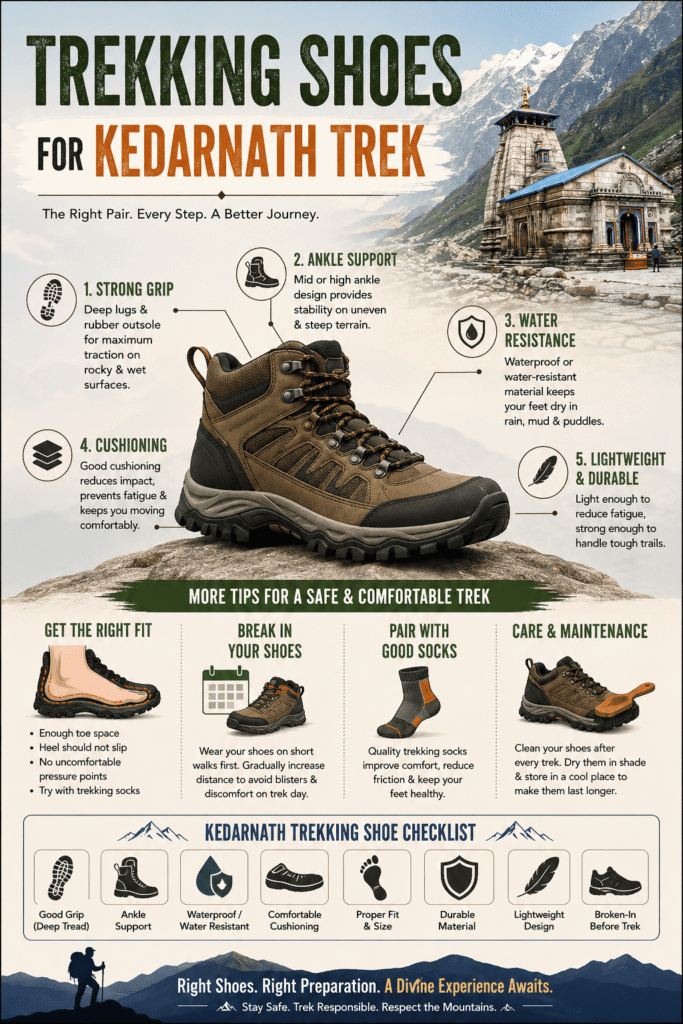

Planning a Kedarnath trek? Choosing the right trekking shoes can make your journey safer, more comfortable, and less tiring. Discover how to select trekking shoes with the right grip, waterproofing, ankle support, cushioning, and durability for the Kedarnath route.
Best Trekking Shoes for Kedarnath: Your Complete Buying Guide
The journey to Kedarnath is more than just a trek—it is an experience that takes you through the beautiful mountains of Uttarakhand. With steep sections, uneven paths, stones, mud, and changing weather conditions, preparation is extremely important. Among all the things you pack for your journey, trekking shoes are one of the most important.
A good pair of trekking shoes can provide better grip, protect your feet from rough terrain, and reduce discomfort during the long walk. Whether you are trekking to Kedarnath for the first time or are an experienced trekker, choosing the right footwear should be a priority.
Why Are Trekking Shoes Important for Kedarnath?
The Kedarnath route involves walking for several kilometres on a mountain trail. Depending on the weather and conditions, you may encounter rocky surfaces, wet sections, mud, stairs, and slippery patches.
Regular sports shoes or casual sneakers may not provide enough traction or protection for such conditions.
Proper trekking shoes are designed with features such as strong soles, improved grip, ankle support, cushioning, and durable materials. These features can help you feel more stable while walking and protect your feet from rough terrain.
However, remember that footwear alone cannot eliminate the risk of slipping or injury. Walking carefully and following local instructions is equally important.
1. Look for Excellent Grip
The first thing you should check when buying trekking shoes is the sole.
Mountain trails can become slippery, especially after rain. Look for shoes with a deep and well-designed tread pattern that can provide traction on uneven and wet surfaces.
A strong rubber outsole is generally preferable for trekking because it can offer better contact with the ground than a smooth casual shoe.
Before buying, check the sole carefully. If the tread looks too shallow or similar to a regular running shoe, it may not be the best choice for a demanding mountain trail.
2. Choose Good Ankle Support
Ankle support is another important factor when selecting trekking shoes.
When walking on uneven ground, your feet can move differently with every step. A shoe with a supportive construction around the ankle can provide additional stability.
For a challenging trek such as Kedarnath, mid- or high-ankle trekking shoes can be worth considering, particularly if you are carrying a backpack or are not accustomed to mountain terrain.
At the same time, the shoe should not feel excessively stiff or uncomfortable. The right balance between support and flexibility is important.
3. Waterproofing Can Be a Big Advantage
Mountain weather can change quickly. Rain, wet paths, and puddles can make the trekking experience more difficult.
Water-resistant or waterproof trekking shoes can help keep your feet dry when you encounter wet conditions. Look for footwear made with appropriate waterproof membranes or treated materials.
However, waterproof shoes can sometimes be less breathable than regular trekking shoes. If you are trekking in relatively dry conditions, breathability may also be important.
The best choice depends on the season and weather conditions you expect during your trip.
4. Don’t Ignore Cushioning
Walking long distances can put considerable pressure on your feet.
Good cushioning can make your shoes more comfortable and help reduce the feeling of fatigue. Look for a shoe with a supportive midsole and comfortable footbed.
Your trekking shoes should feel comfortable from the beginning. Never choose a pair simply because it looks stylish. Comfort, fit, grip, and durability should come first.
5. Get the Right Size
One of the biggest mistakes trekkers make is choosing the wrong shoe size.
Your trekking shoes should fit securely without squeezing your toes. Your heel should not move excessively inside the shoe.
It is a good idea to try trekking shoes while wearing the socks you plan to use during your trek. Walk around for several minutes and check whether there is any uncomfortable pressure.
Also remember that feet can swell slightly during long walks, so extremely tight footwear can become uncomfortable.
6. Break in Your Shoes Before Kedarnath
Never wear brand-new trekking shoes directly for your Kedarnath trek.
Wear them for shorter walks before your trip. Gradually increase the distance so your feet can adjust to the shoes.
Breaking in your shoes can help you identify problems such as rubbing, heel movement, tightness, or uncomfortable pressure before you reach the mountains.
Pair your shoes with good trekking socks to improve comfort and reduce friction.
7. Consider the Weight of the Shoes
Heavy shoes can make a long trek feel more tiring.
While durable construction and protection are important, unnecessarily heavy footwear may increase fatigue. Look for shoes that provide a good balance between protection, durability, support, and weight.
If you are a beginner, a comfortable and reasonably lightweight trekking shoe can make the walking experience much easier.
What Should You Look for in Kedarnath Trekking Shoes?
Before purchasing your pair, use this simple checklist:
- Strong rubber outsole with good traction
- Deep tread for better grip
- Comfortable cushioning
- Good ankle support
- Water-resistant or waterproof construction, depending on the season
- Durable upper material
- Secure laces and heel fit
- Enough toe space
- Comfortable weight
- Proper size and fit
Don’t Forget the Rest of Your Trekking Gear
Trekking shoes are important, but they are only one part of your preparation.
Carry comfortable clothing suitable for changing mountain weather, a rain layer, water, basic personal medication, sunscreen, sunglasses, a small first-aid kit, and other essentials recommended for your journey.
Check the latest official travel and pilgrimage advisories before starting your trip, and follow instructions from local authorities and trekking officials.
Final Thoughts
The Kedarnath journey can be physically demanding, but the right preparation can make it much more comfortable. A reliable pair of trekking shoes with good grip, ankle support, cushioning, durability, and suitable weather protection can be one of the best investments you make for your trip.
Don’t select trekking shoes based only on appearance or price. Focus on how they fit your feet and whether they are suitable for the terrain and weather you expect.
Most importantly, buy your shoes early, break them in properly, and test them before your journey.
Your Kedarnath adventure starts with every step—so make sure your feet are ready for the journey.